
Bold Patterns in Small Rooms: Where to Begin
A small room can be a satisfying place for an expressive palette. The goal is not to make every surface equally bold. Choose a feature you enjoy, then consider how cabinet color, flooring and the view from the doorway will support that decision.
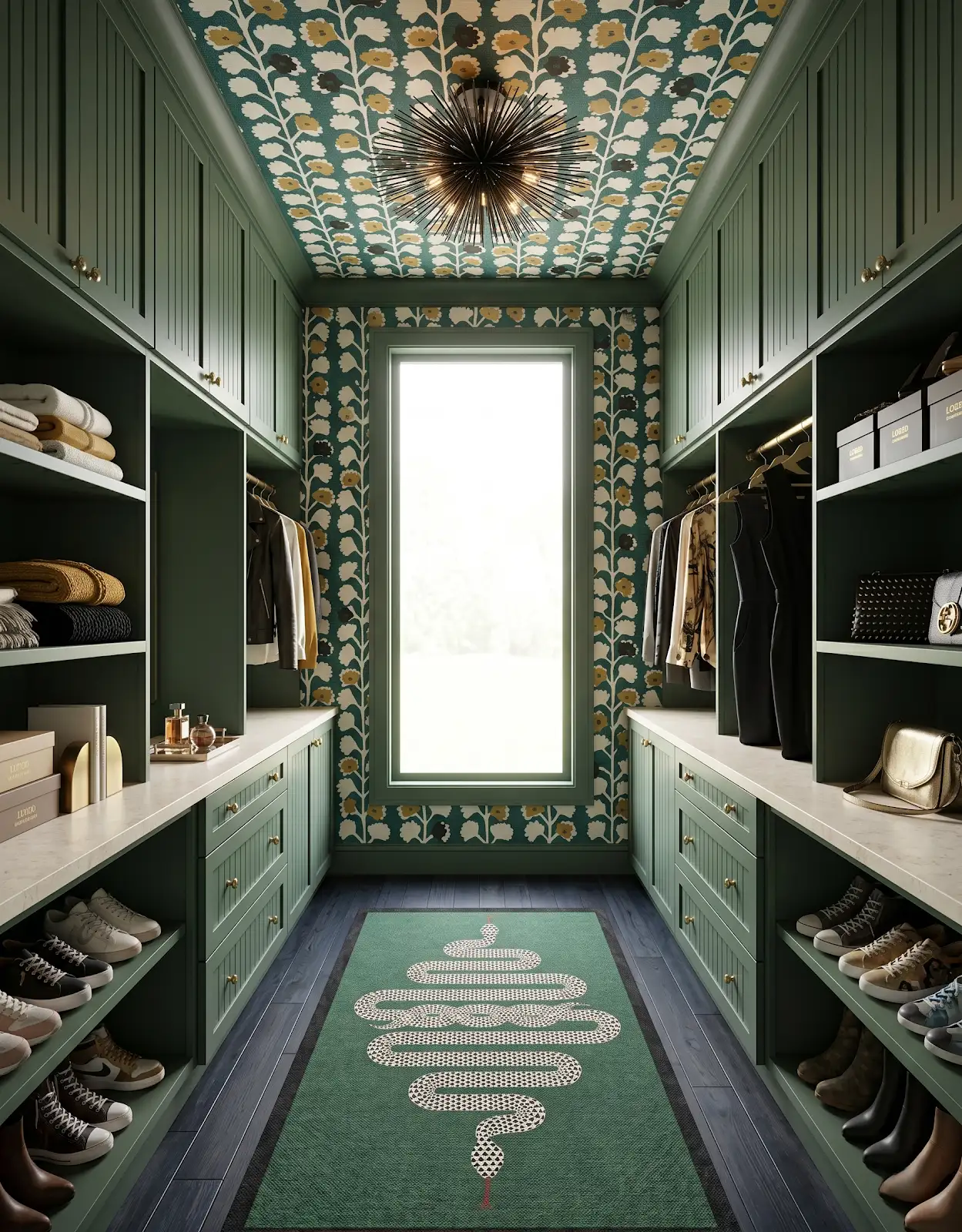
AI-generated design concepts from Anna’s approved inspiration library. Images illustrate color, proportion and finish relationships; they are not completed customer projects or exact manufacturer products.
1. Pick the surface you care about
Start with the patterned wall, floor or textile you would most miss if it disappeared. Use it to guide the next selections. Collecting several unrelated statement pieces first can make a small room harder to resolve than beginning with one clear favorite.
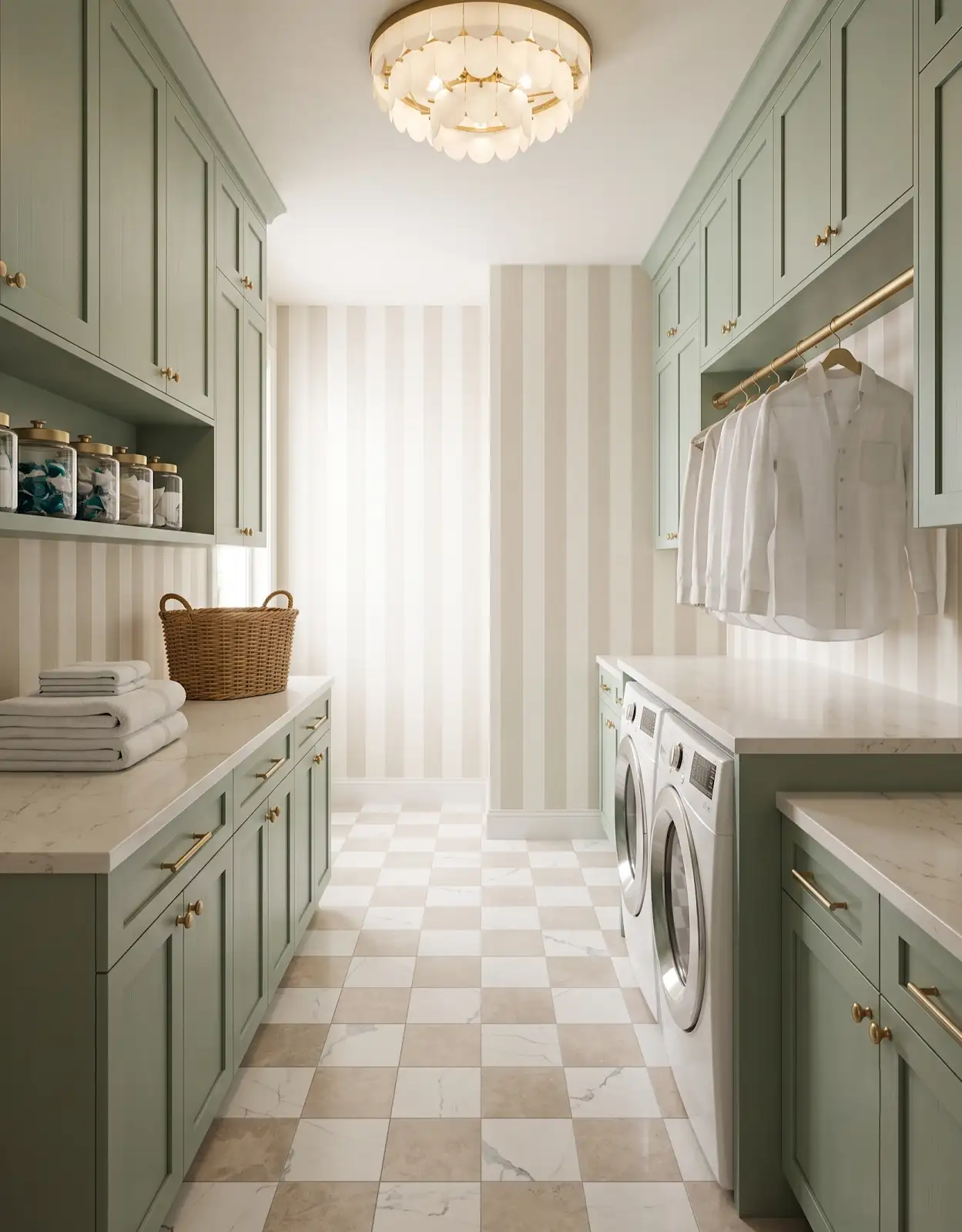
2. Look at the doorway view
Stand where you will first see the room. A pattern on the far wall may have a stronger presence than a larger area beside the door. Let that everyday view guide where the most expressive surface belongs in the composition.
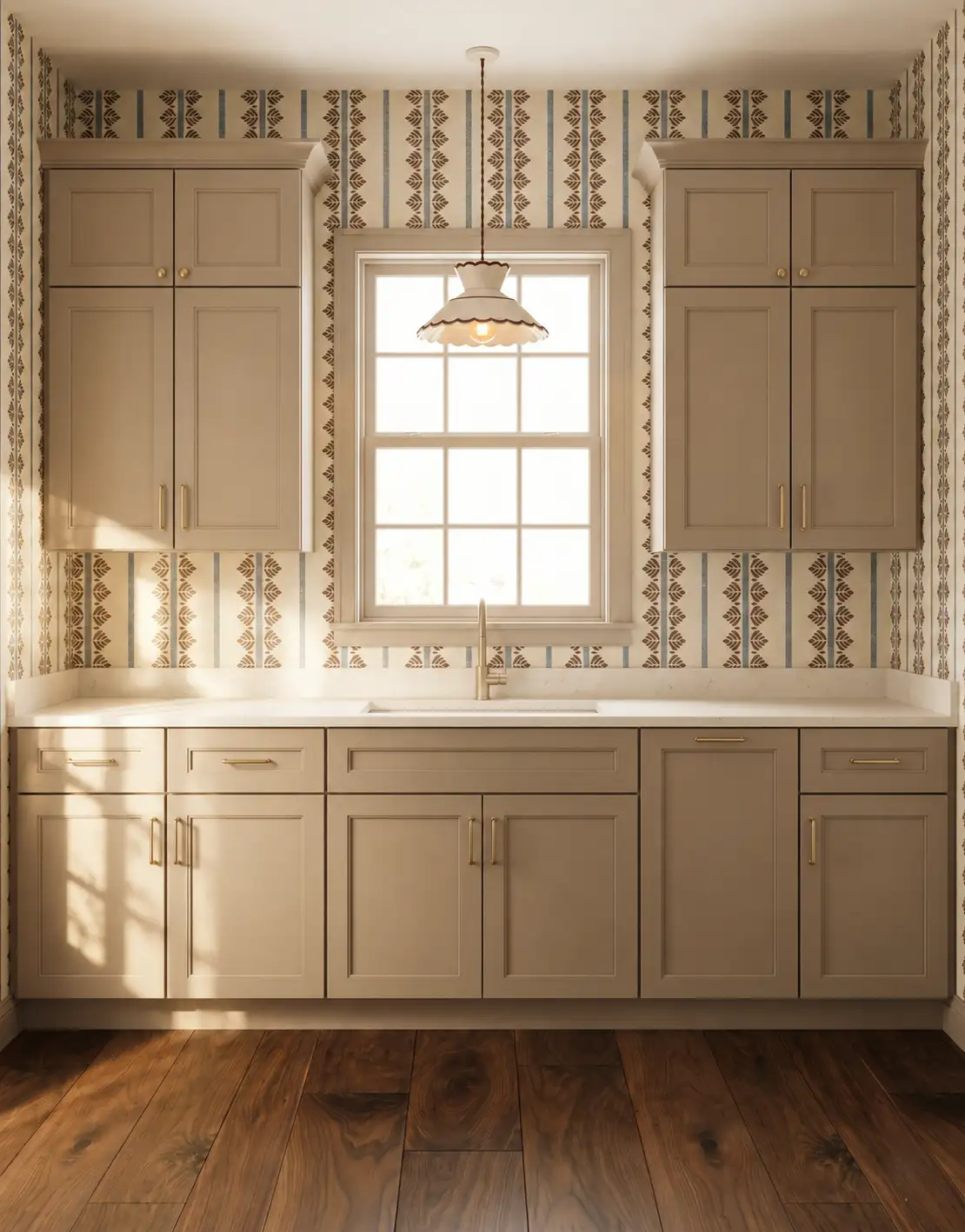
3. Compare the repeat at full scale
View several repeats or a larger representation rather than a tiny motif. The scale affects how much of the pattern remains visible around cabinetry and openings. A design you love as a small sample may read very differently across a full wall.
4. Give cabinetry a supporting color
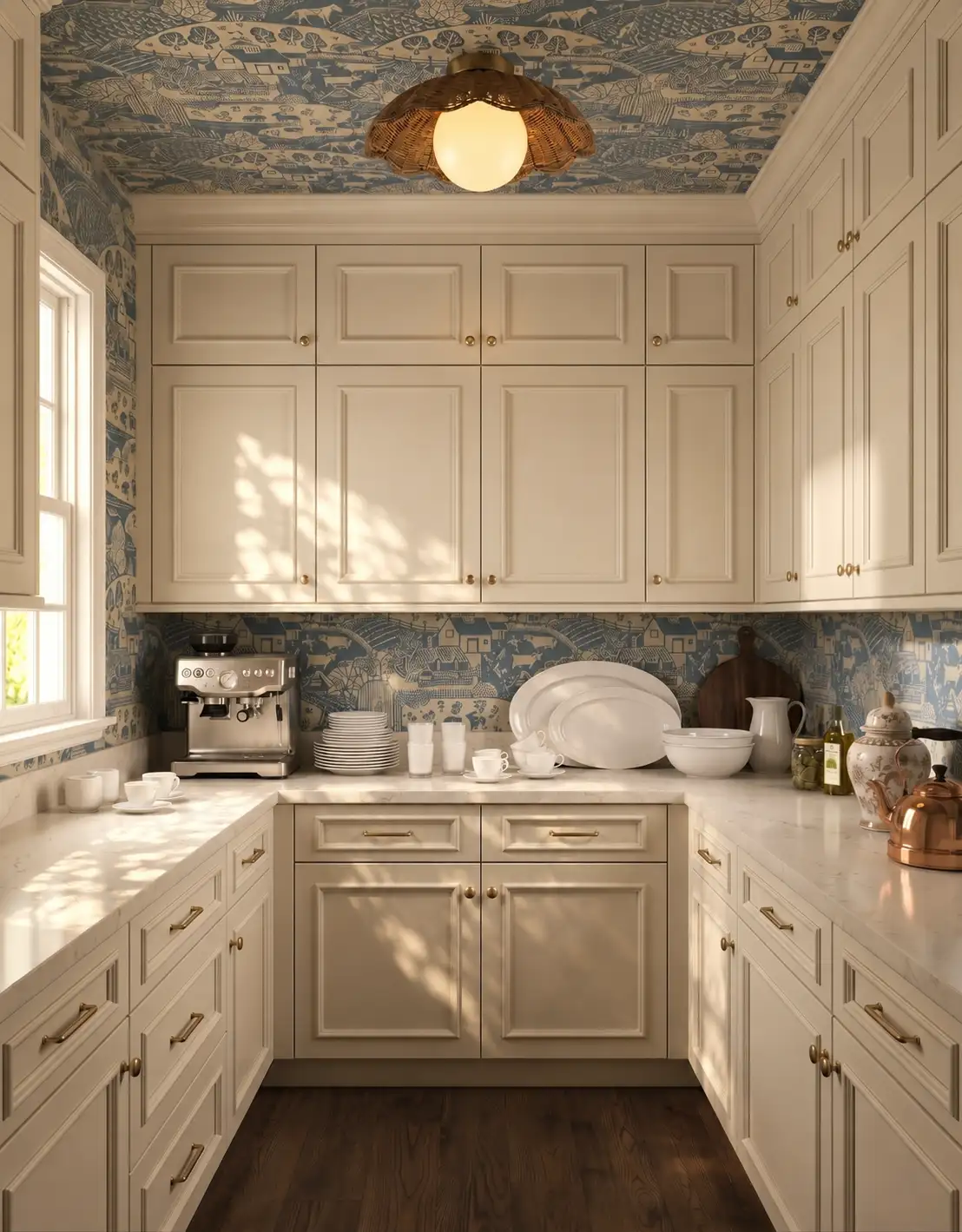
Pull a quieter color relationship from the main pattern or choose a simple contrast. The cabinets can help organize the room visually. They do not need another busy finish simply because the space is meant to have personality.
5. Keep a place for the eye to rest
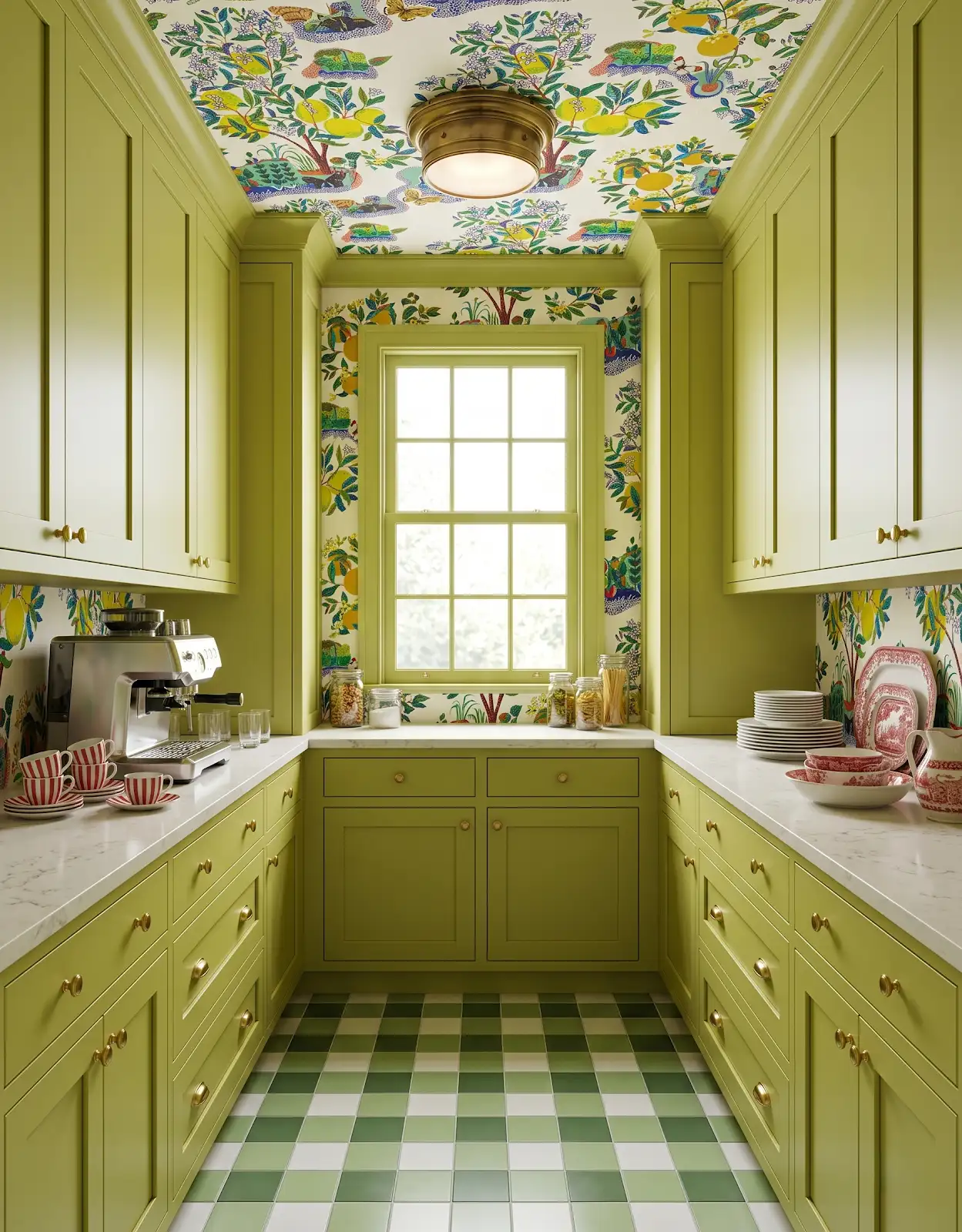
A plain counter, quiet door or restrained floor can provide relief beside the feature. Decide which surface will play that role before adding accessories. A bold room often feels more comfortable when its strongest details have some open visual space around them.
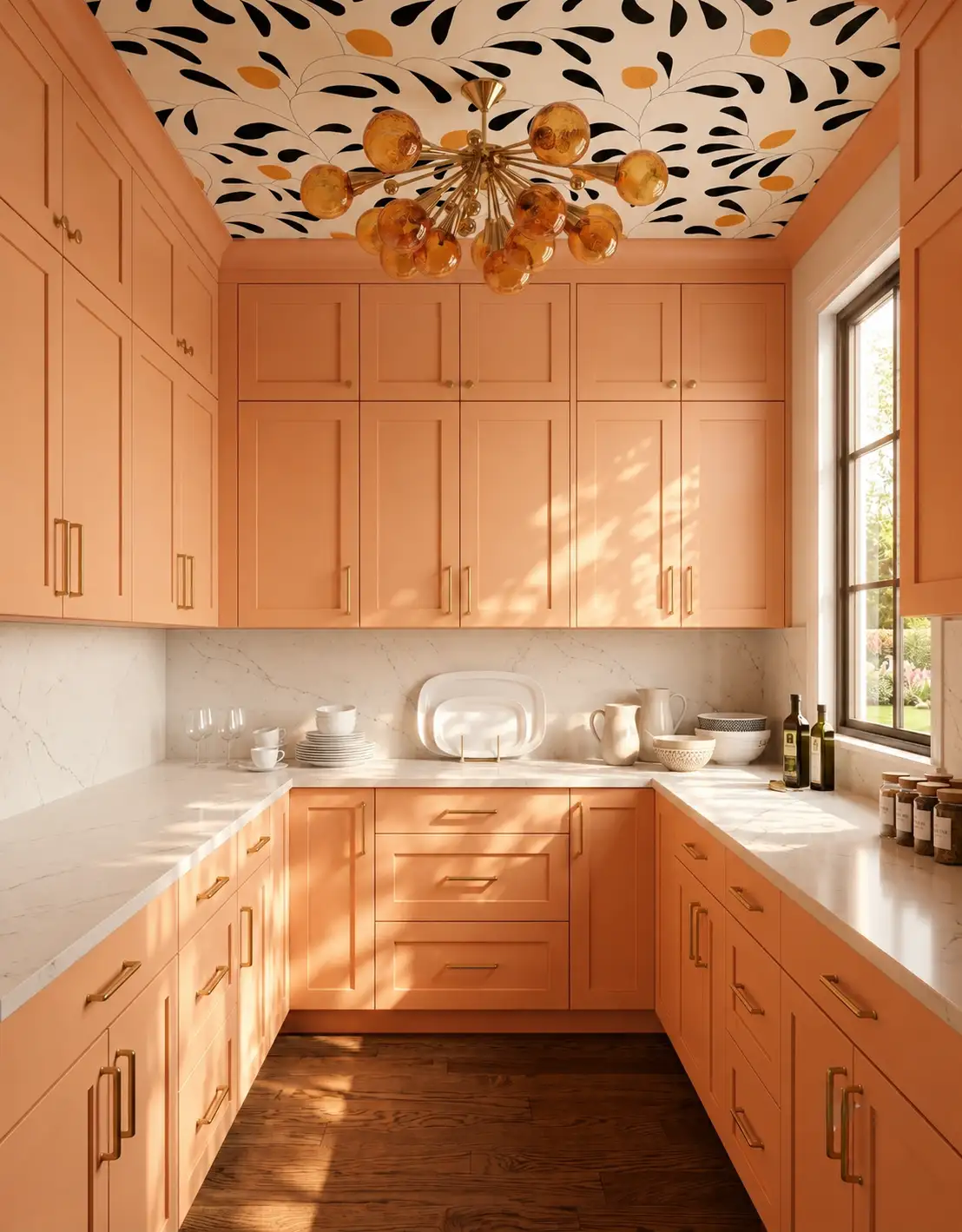
6. Consider the ceiling separately
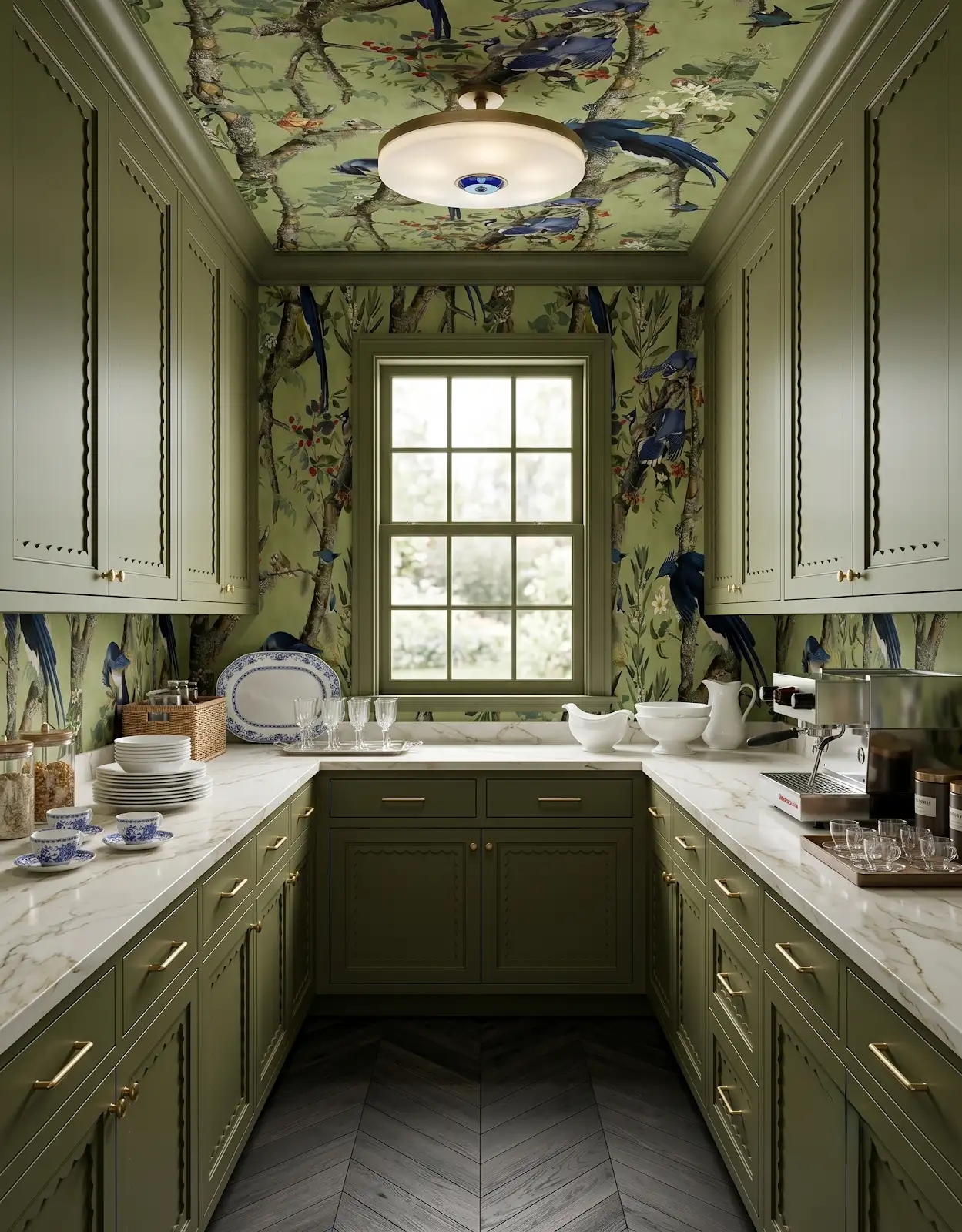
A patterned ceiling changes the room's overall effect, even when it is not the first surface you notice. Compare that idea with the walls and cabinetry as a whole. Treat concept imagery as a study of balance rather than a verified installation proposal.
7. Repeat an accent sparingly
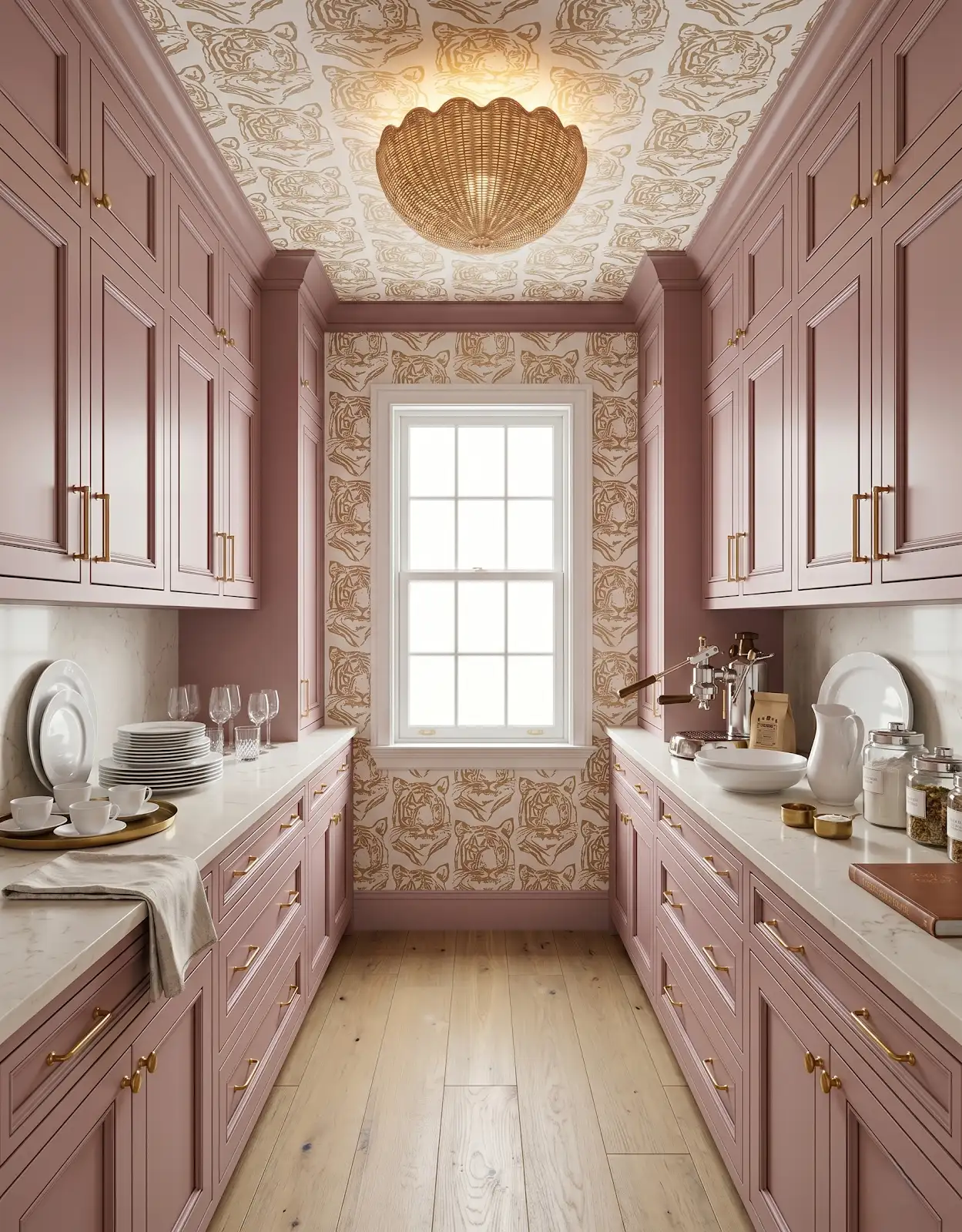
One repeated color in hardware-adjacent details, a textile or a small object can connect the room. You do not need to trace every color from the pattern into another item. A few deliberate echoes usually communicate the idea more clearly.
8. Connect to the room outside
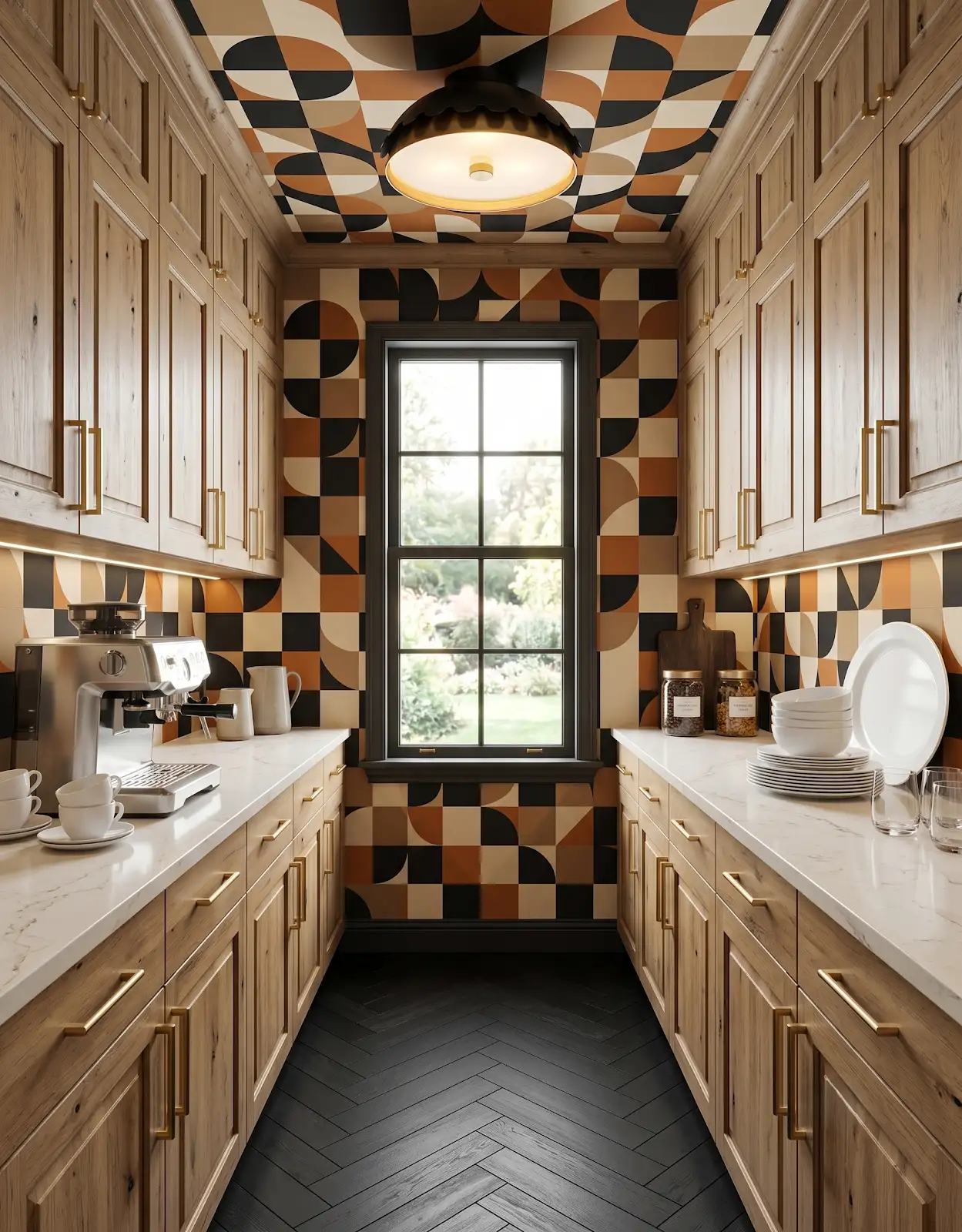
Look back through the doorway toward the adjoining space. A shared wood tone or related cabinet color can keep the bold room connected to the house. That small relationship can provide continuity while allowing the interior to feel distinct.
9. Translate the concept into selections
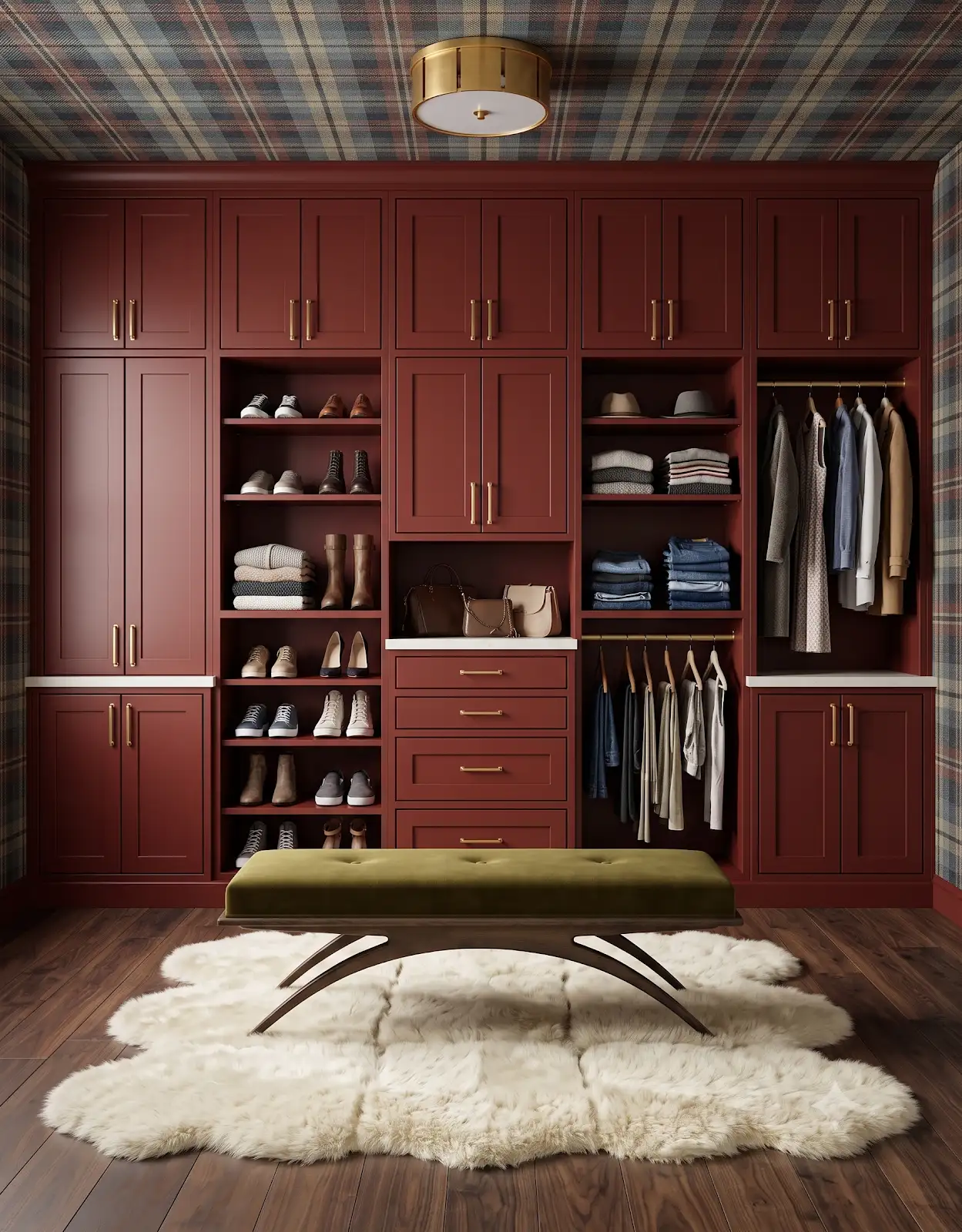
Bring the feature image and the practical room information to The Design Center. We can help discuss cabinetry, flooring, tile and hardware directions. Patterned concept walls do not identify stocked wallpaper or tile; confirm the actual material and supplier for each selection.
Compare the options with The Design Center
Browse the relevant guides and official catalogs, then bring your room photos and exact product details to the showroom. We can help coordinate selections and confirm availability, pricing and timing for your project.
Products for Your Home Kitchen & Bathroom Cabinets Flooring in Orofino, Idaho Explore Honest Cabinets All design ideasTHE DESIGN CENTER / OROFINO, IDAHO
Come in with an idea. Leave with a direction.
A favorite color. A cabinet sample. A room that needs a little love. Bring it to the showroom and let’s find the finishes that feel like you.
Step inside the showroomFind us on Johnson Ave.
124 Johnson Ave, Orofino, ID 83544
Monday–Friday · 8am–5pm
Call or text 208-786-0361
Directions & contact details